

Municipalities discuss progress in municipal heat planning at Wolmirstedt town hall
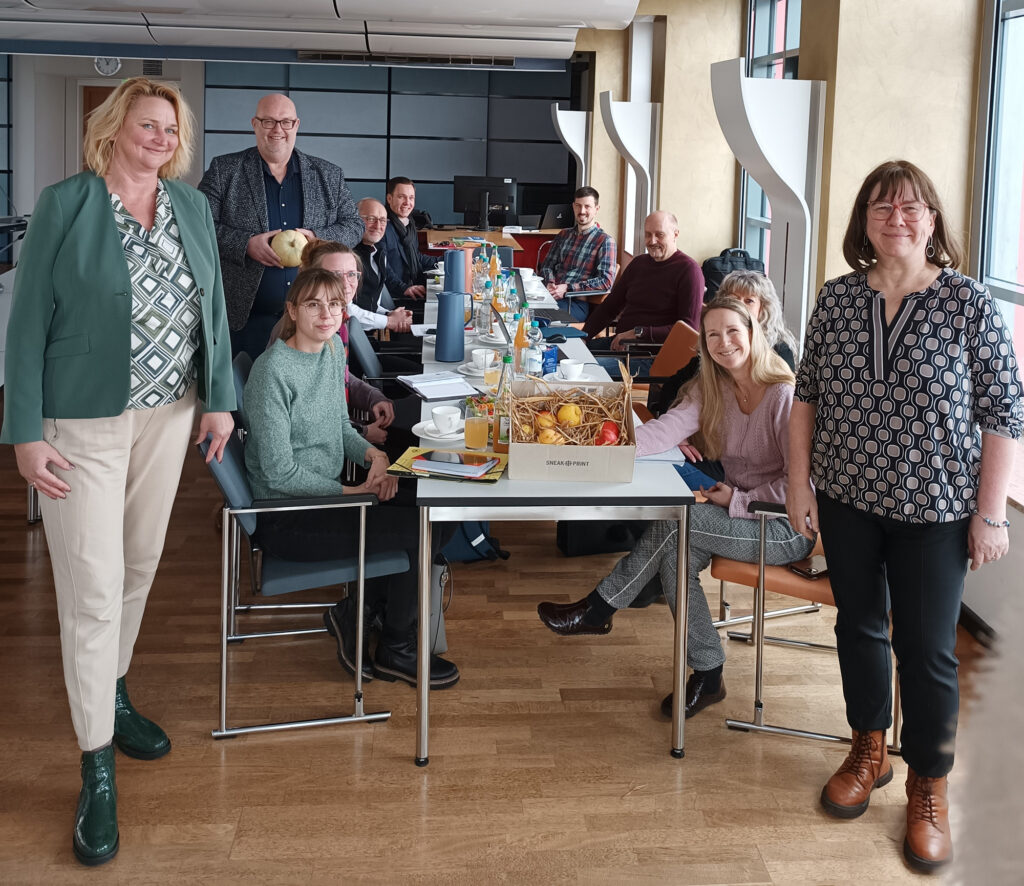
A consultation on inter-municipal energy management took place in Wolmirstedt town hall. Participants from municipalities and institutions working on this topic were invited.
In 2016, the town of Wolmirstedt became a member of Saxony-Anhalt’s first energy efficiency network called “Kommunale Energieeffizienz – Netzwerk Mittelland”. The aim of this association of six municipalities was to record existing potential, exchange information between the towns and municipalities and thus multiply existing positive experiences, but above all to reduce energy costs.
The networking initially started as a funded project. Since the funding came to an end, Wolmirstedt has nevertheless continued to network with the neighboring municipalities of Barleben, Flechtingen and Oebisfelde-Weferlingen under the name “Intercommunal Energy Management” in order to make the best possible progress in terms of heat planning and energy management. The partners are supported by RKW Sachsen-Anhalt, an innovation center of the German economy, which, among other things, organizes regular meetings.
The 20th network meeting of the IEM has now been organized in Wolmirstedt. Mayor Mike Steffens opened the event and emphasized the importance of the association for regional cooperation. As Heidi Werner, Managing Director of RKW Saxony-Anhalt, explained at the beginning, the main topic of discussion on this day was the current status of municipal heat planning in the individual municipalities. In a discussion round, those present highlighted what needs to be considered in heat planning.
Among other things, the early and continuous involvement of key players in the planning process, such as the local housing associations, was mentioned. The economic viability of the future heat supply was also highlighted as an important factor. It became clear that even technically mature solutions would not be accepted if the resulting heating prices for households and companies were too high. As the participants pointed out, it is also an advantage in this context if technical infrastructure already exists in the municipalities. Even if this dates back to GDR times, it can serve as a valuable basis that can be modernized and upgraded for renewable energies.
The guests at the network meeting agreed that no single technology could cover all the requirements of a municipal heating supply system, but that a mix of centralized and decentralized solutions was necessary. Strategic issues were also discussed – for example, how best to deal with political requirements with regard to heat planning and how newly created political regulations – for example with regard to financial participation by municipalities in new wind power and photovoltaic systems – could be used.
As the network meetings continue to focus on exchange, a practical example was also given this time. Thomas Neumann, Climate Protection Manager of the town of Oschersleben, was a guest and presented the municipal heating plan of the neighboring municipality. He reported in detail on the strategic approach that Oschersleben pursued in its municipal heating planning.
Other practice-oriented short presentations and expert input were also given at the event. For example, Anja Schmidt, who is responsible for municipal heat planning and energy issues at Wolmirstedt town hall, spoke about a list of criteria that could provide general information on site selection and planning for battery storage projects. Nadine Neue from the municipality of Barleben presented the “Strahlkraft” project, while Claus Vorstadt from RKW Sachsen-Anhalt also spoke about the current opportunities for municipalities to participate in renewable energy projects.
The participants ultimately agreed to continue the regular exchange of experience within the network. In the future, they would also like to develop joint catalogs of criteria, including for battery storage and data bases. They would also like to intensify inter-municipal cooperation, especially when it comes to complex topics. The next online meeting is planned for March and the next meeting in person in May. Municipalities that would like to join the network are very welcome and can contact Heidi Werner from RKW Saxony-Anhalt.