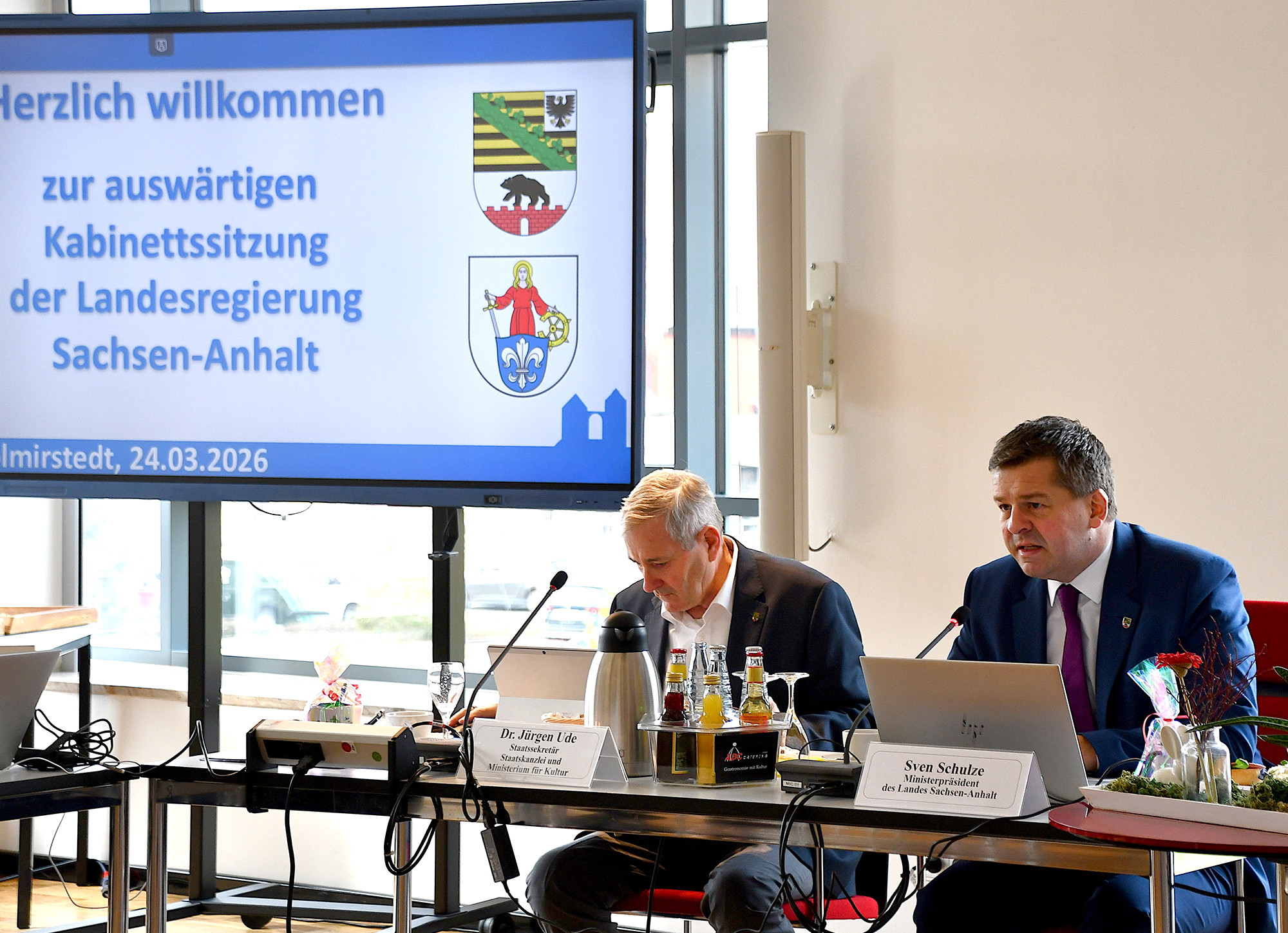
The state government of Saxony-Anhalt met for an external cabinet meeting in the town of Wolmirstedt on Tuesday, March 24, 2026. Under the leadership of Minister President Sven Schulze, the ministers discussed both general and regional issues. In this context, they dealt with the infrastructural, economic, social and cultural development in the town of Wolmirstedt and the Börde district, among other things.
Wolmirstedt’s mayor Mike Steffens and Börde district councillor Martin Stichnoth also had their say in the public part of the meeting. Mike Steffens took the opportunity to draw the state government’s attention to current issues that are important for the city administration, but above all for the citizens of Wolmirstedt and its districts.
For example, he addressed the topic of battery storage. Due to its transformer station, Wolmirstedt has long been receiving an increasing number of inquiries from investors who want to build battery storage facilities in the immediate vicinity. Until now, only operators of new wind power and photovoltaic systems have been required by law to make an annual payment to local authorities. Operators of battery storage systems have so far been exempt from this. Mike Steffens pointed this out and also explained that a catalog of criteria for battery storage systems is still missing as a requirement from the state. The mayor also commented on the so-called “construction turbo”, a federal law. Mike Steffens said that there were no recommendations for action or a specific implementing law. Local authorities are left to their own devices when it comes to implementation.
They also discussed the Wolmirstedt community school “Gottfried Wilhelm Leibniz” and the all-day school “Johannes Gutenberg”, for which there are currently controversial plans to merge. It was agreed that the responsible Minister of Education, Jan Riedel, would meet with the mayor and the district administrator to discuss this issue in the near future.
The financial challenges facing the city were also discussed. These include topics such as digitalization, municipal heat planning, the implementation of the new property tax and VAT law, as well as the abolition of road expansion contributions, which, while welcome for citizens, is tearing financial holes in the city budget.
Mike Steffens also addressed specific situations that are specific to Wolmirstedt. For example, the town is currently building a new sports stadium with funding from the state. However, there is no money for a connecting road along the stadium between the nearby Kurfürst-Joachim-Friedrich-Gymnasium and the district road to Samswegen. “We would like to realize this road construction project together with the district and would like to receive funding from the state,” said Mike Steffens.
The creation of a near-natural path along the River Ohre and a cycle path from the future stadium across the Ohre to Lake Jersleber See were also requests that the mayor of Wolmirstedt made to the state government. He also used the out-of-town cabinet meeting to draw attention to the situation in two districts of Wolmirstedt. The residents in Farsleben and Mose are under considerable strain, explained Mike Steffens. They have a transformer station and a high traffic load from the state road 44 right on their doorstep. In addition, there is an increasing number of requests for battery storage facilities in both villages.
According to the mayor, some small measures could help the residents of both villages. For example, he explained, there are two crosswalks on the main road in Farsleben, but they lack proper lighting. A cycle path is also needed between Farsleben and Mose.
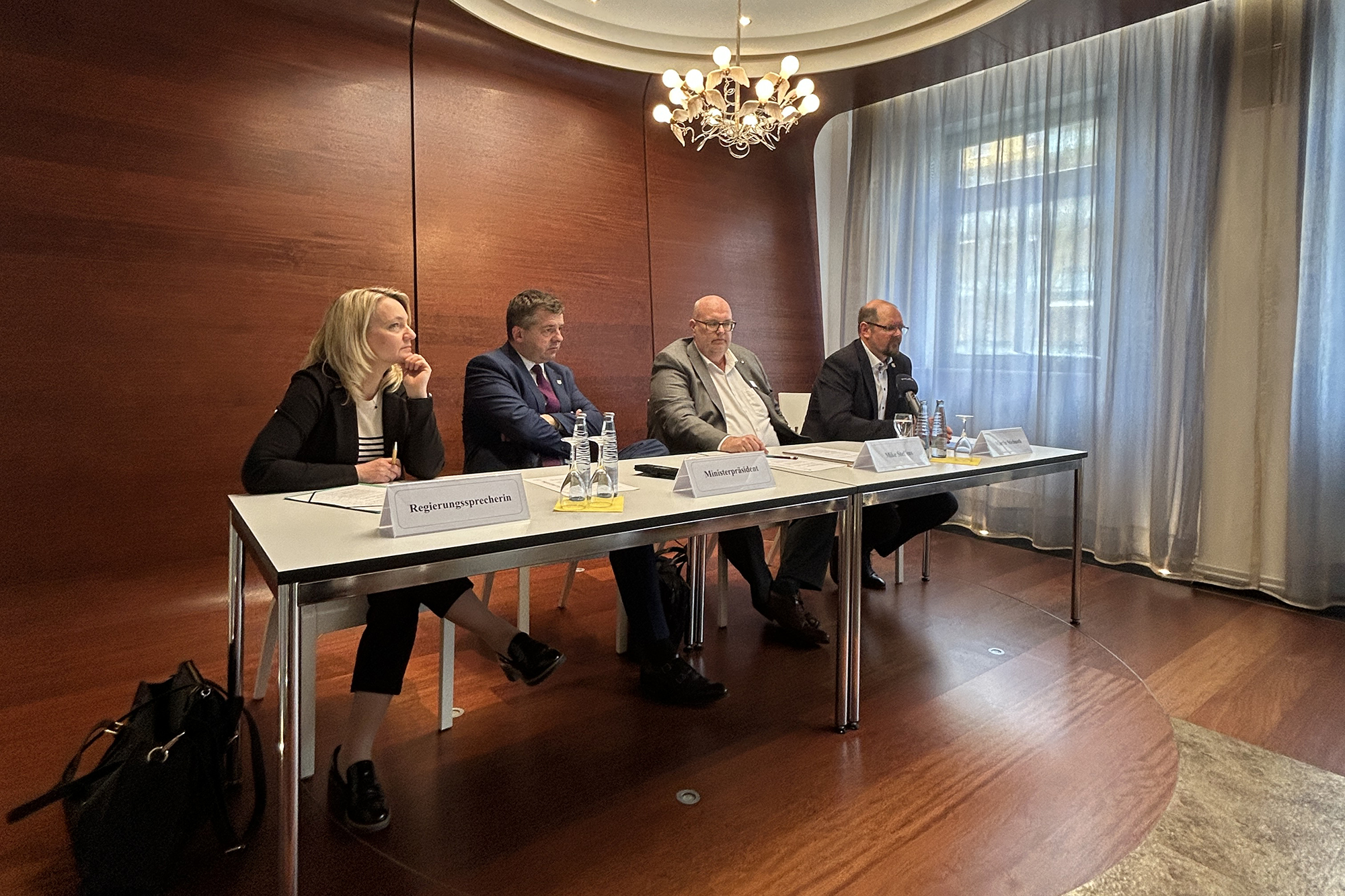
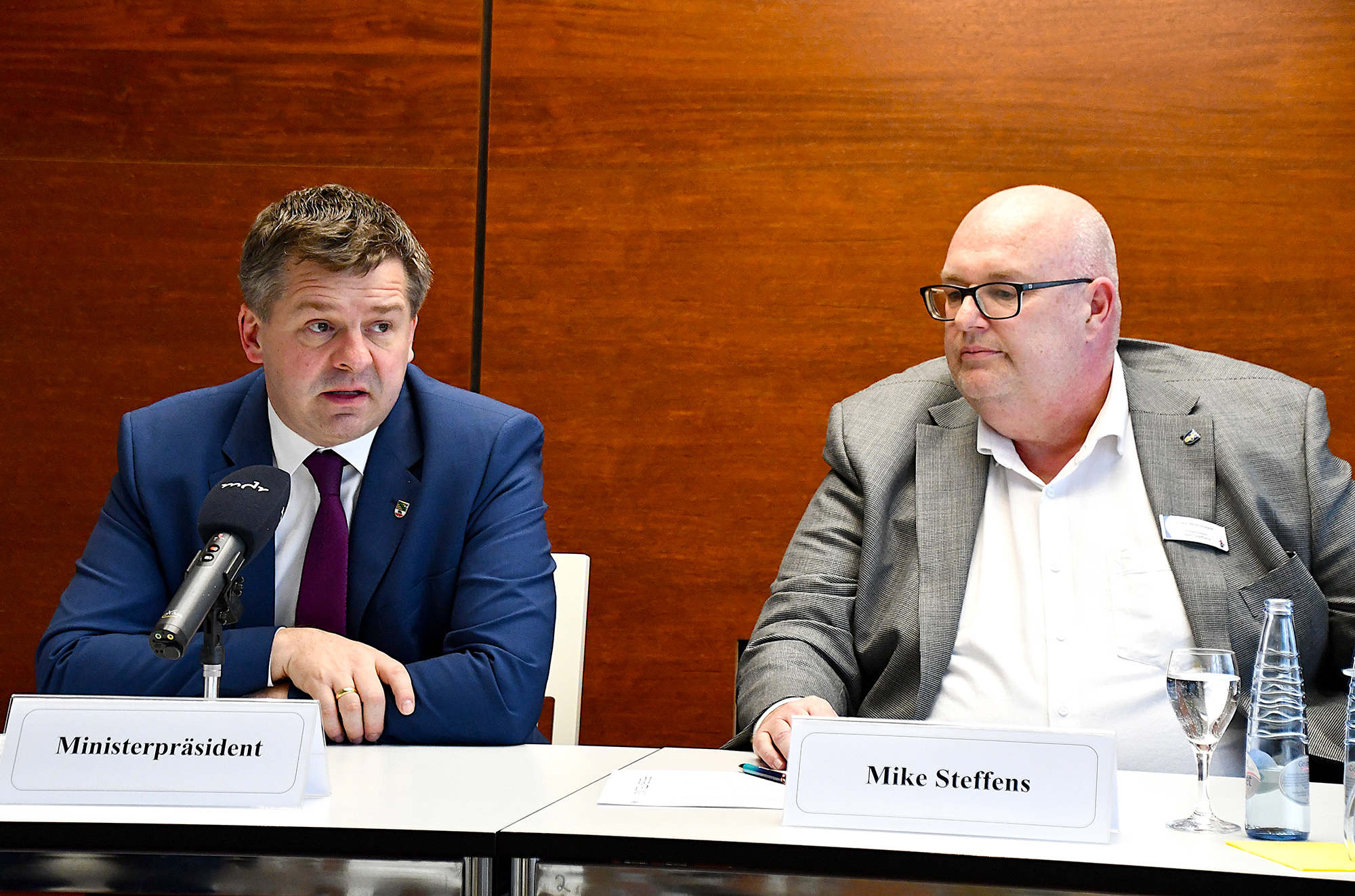
Mike Steffens, Sven Schulze and Martin Stichnoth explained what had been discussed at the cabinet meeting at a press conference in the wedding room of Wolmirstedt town hall.
The state government of Saxony-Anhalt held an external cabinet meeting in Wolmirstedt town hall.
Minister of Labor Petra Grimm-Benne writes in the Wolmirstedt town book of honor.
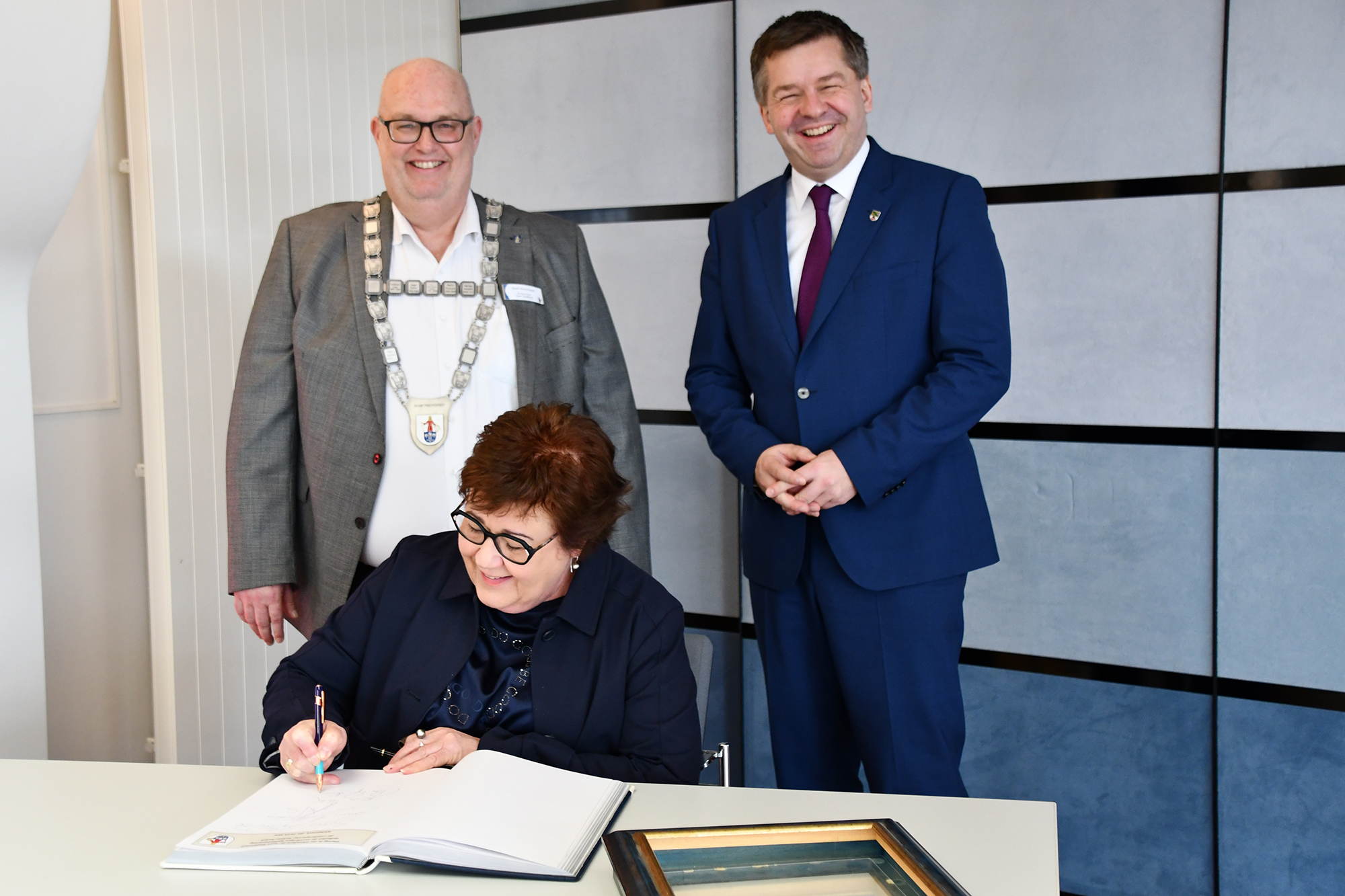
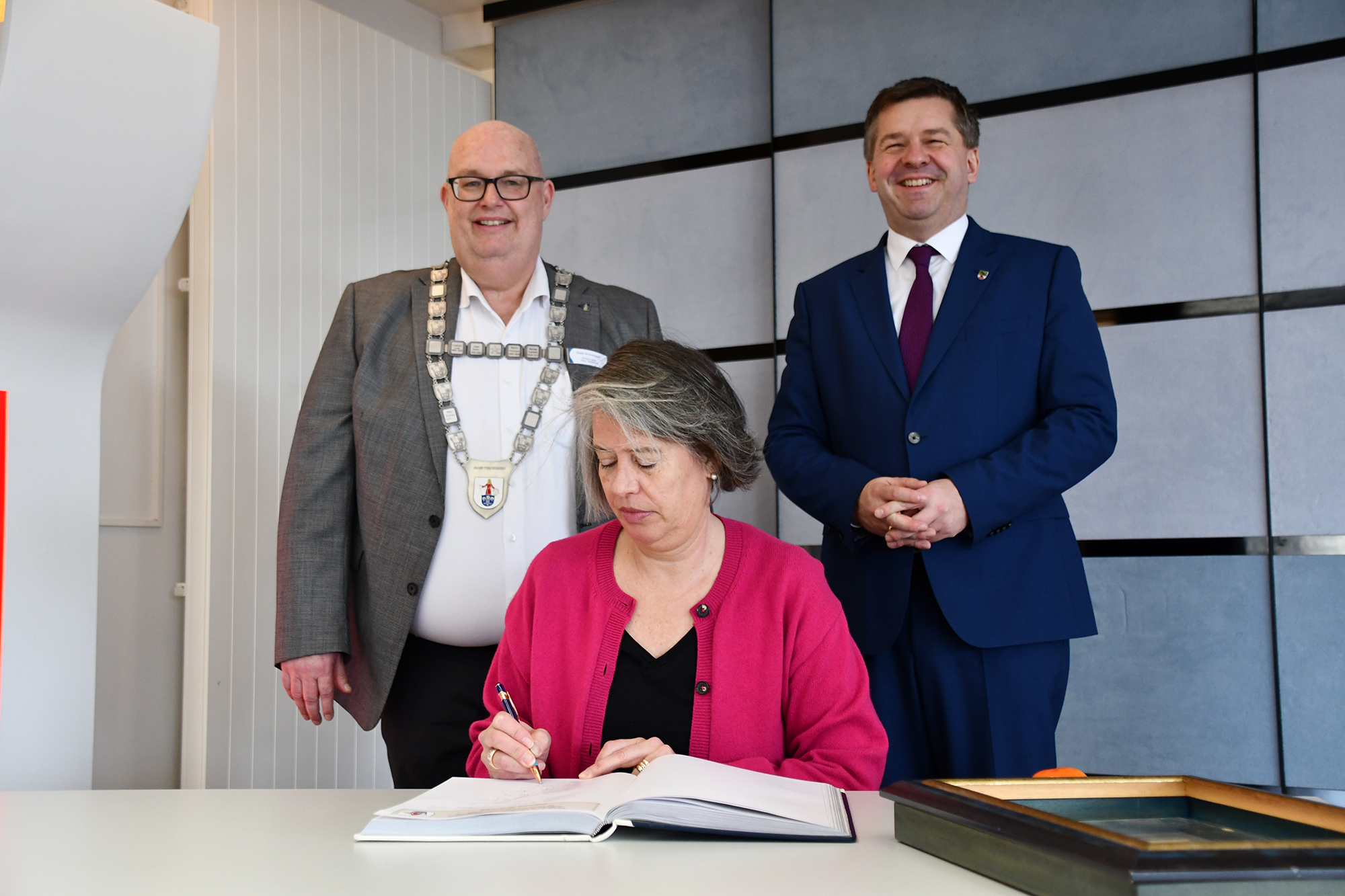
Saxony-Anhalt Minister of the Interior Tamara Zieschang signs the Wolmirstedt town register of honor in the presence of Mayor Mike Steffens and Minister President Sven Schulze.
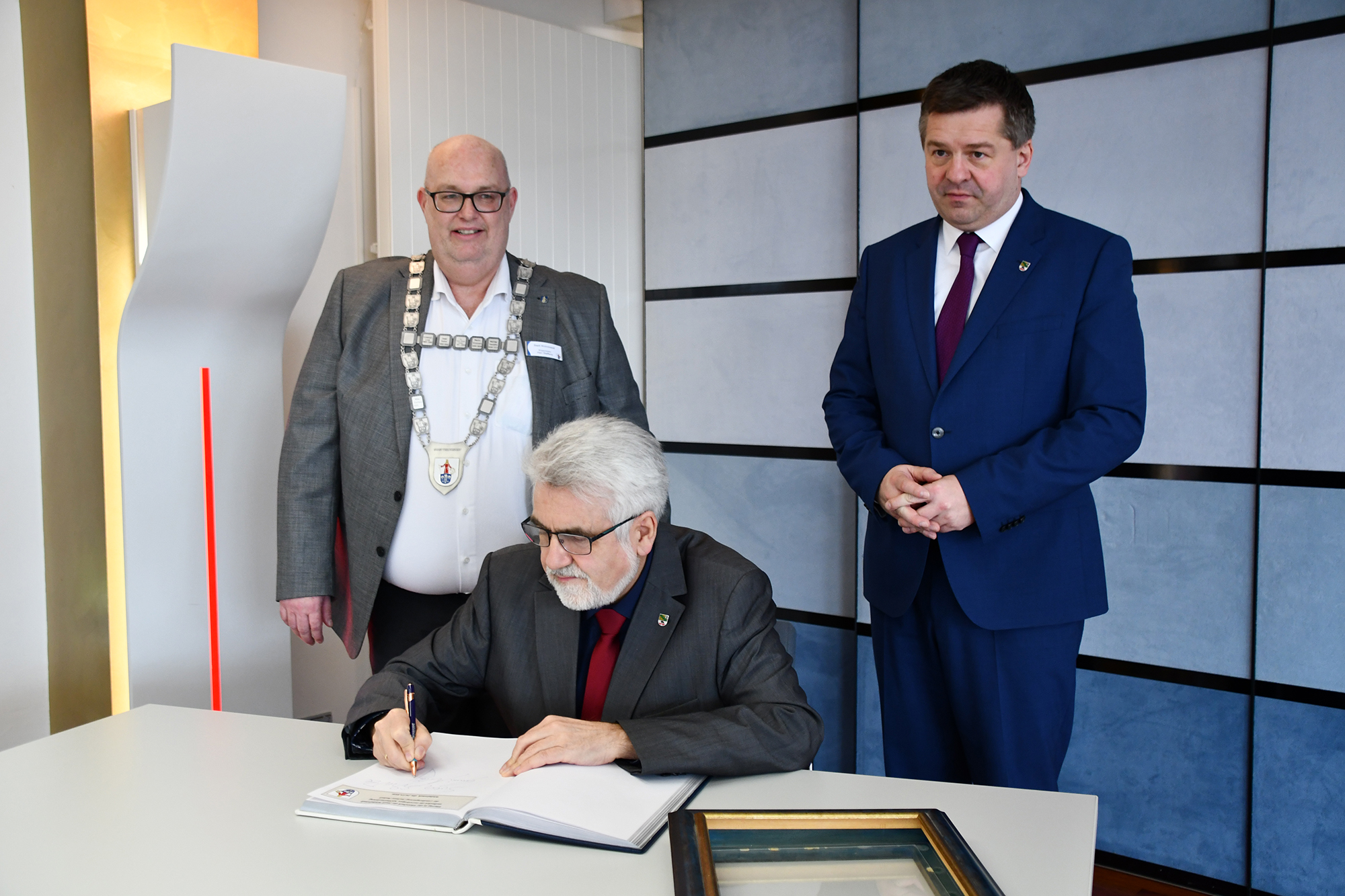
Science Minister and Deputy Prime Minister Armin Willingmann signs the Wolmirstedt town register of honor.
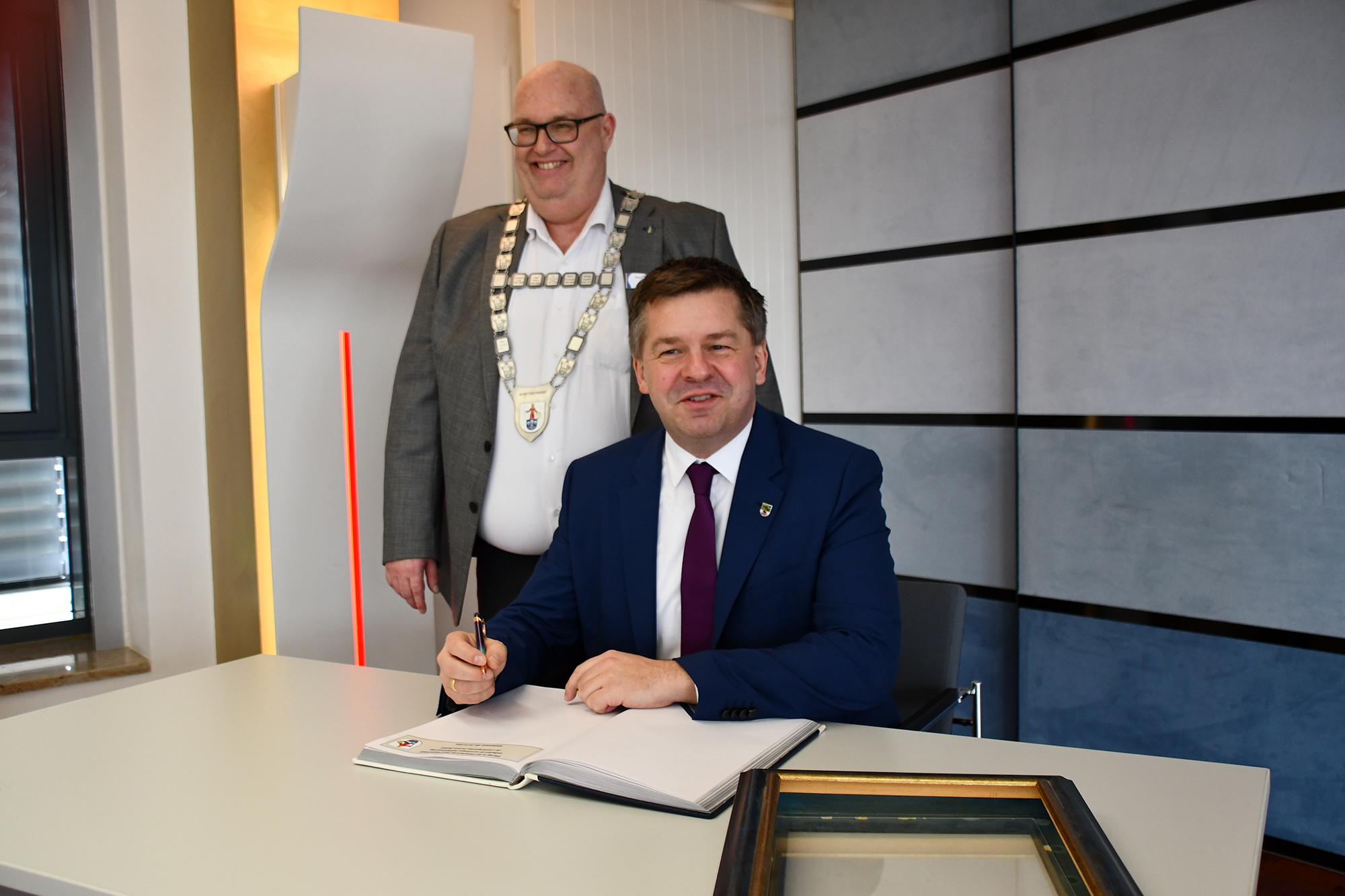
Saxony-Anhalt’s Minister President Sven Schulze writes in the town of Wolmirstedt’s book of honor at an external cabinet meeting of the state government.
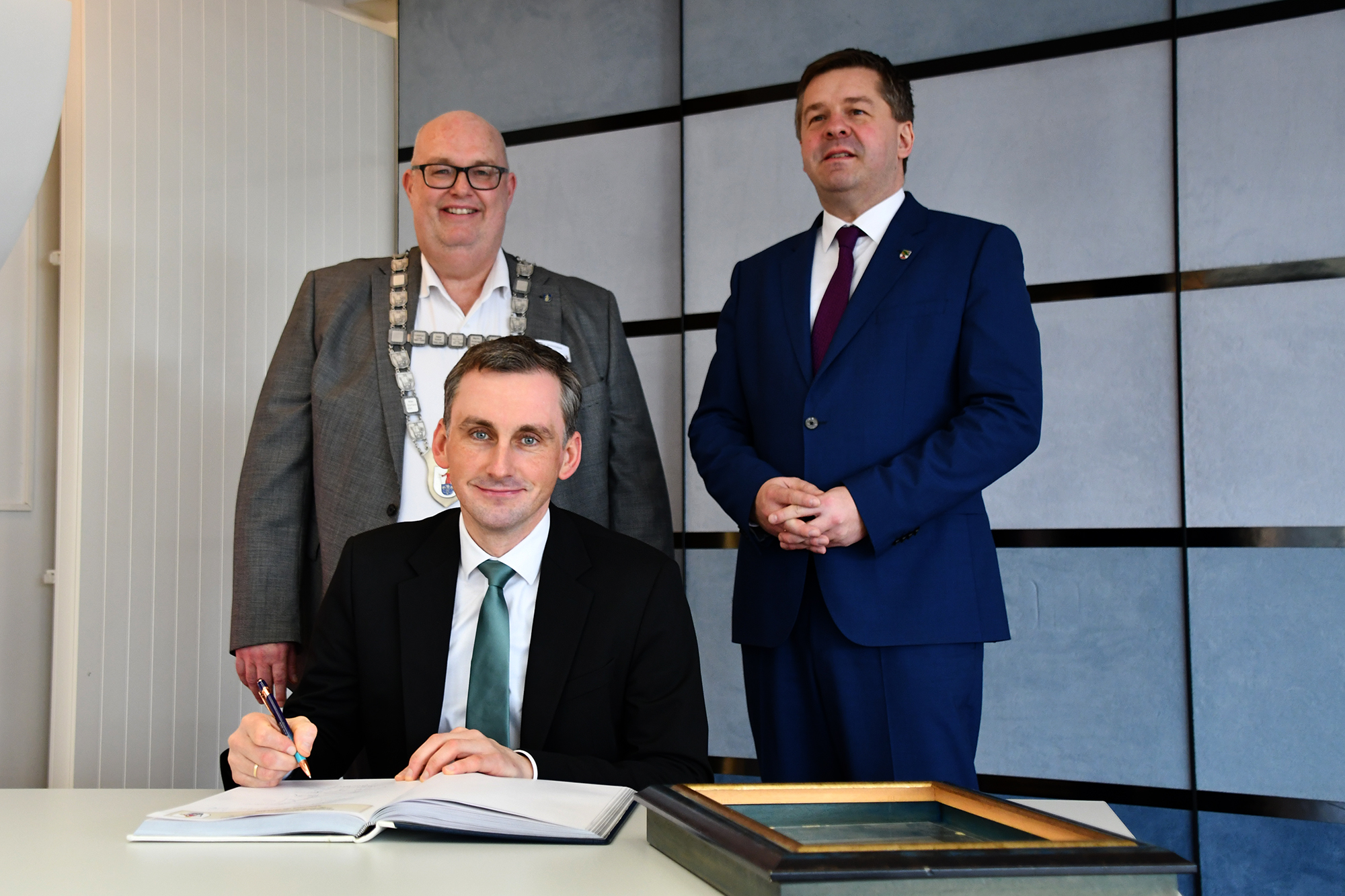
Saxony-Anhalt Minister of Education Jan Riedel signs the Wolmirstedt Book of Honor.
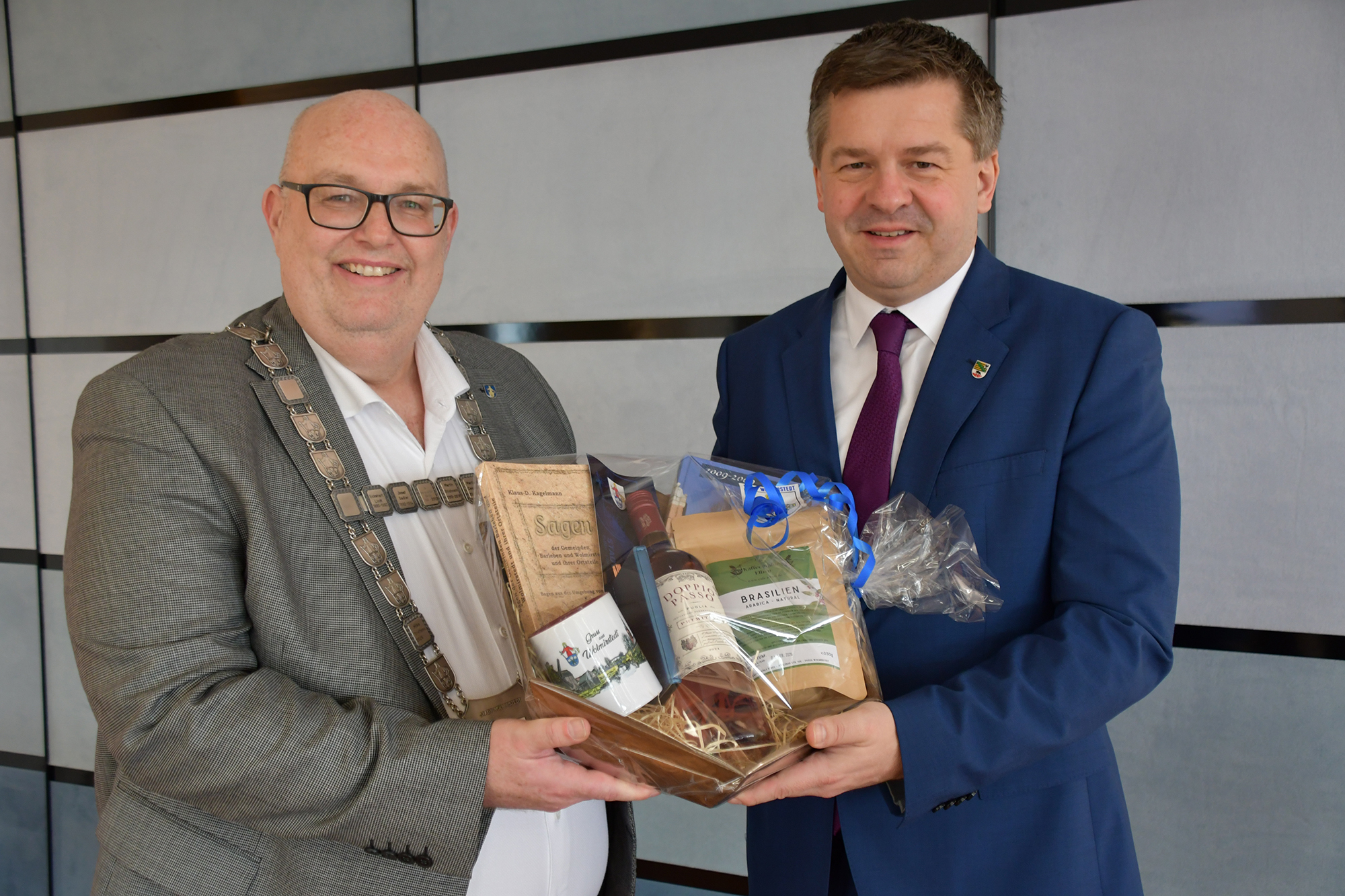
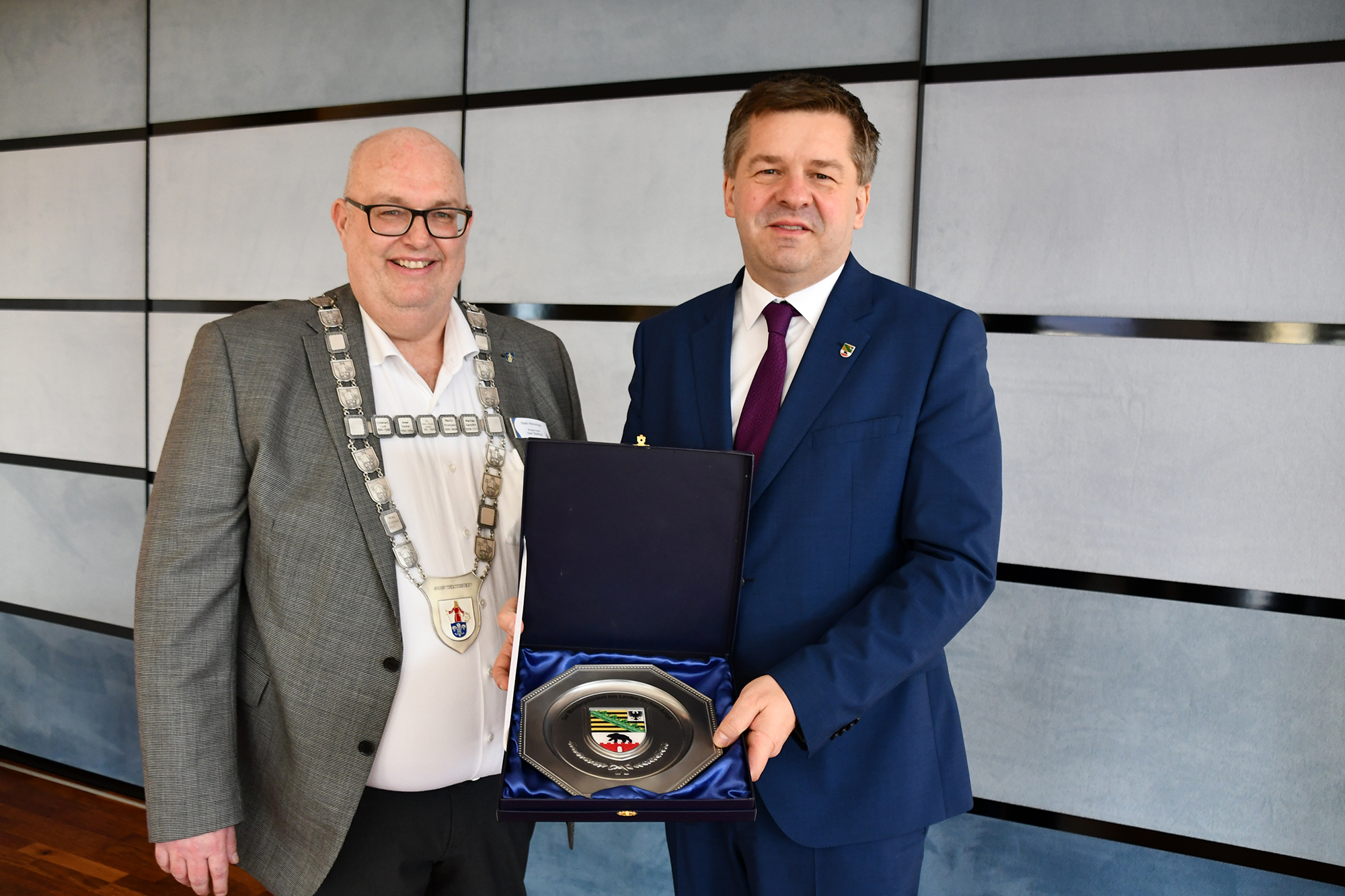
Wolmirstedt’s mayor Mike Steffens presents Saxony-Anhalt’s Minister President Sven Schulze with a gift.
Saxony-Anhalt Minister President Sven Schulze (right) brought a gift for Wolmirstedt Mayor Mike Steffens.
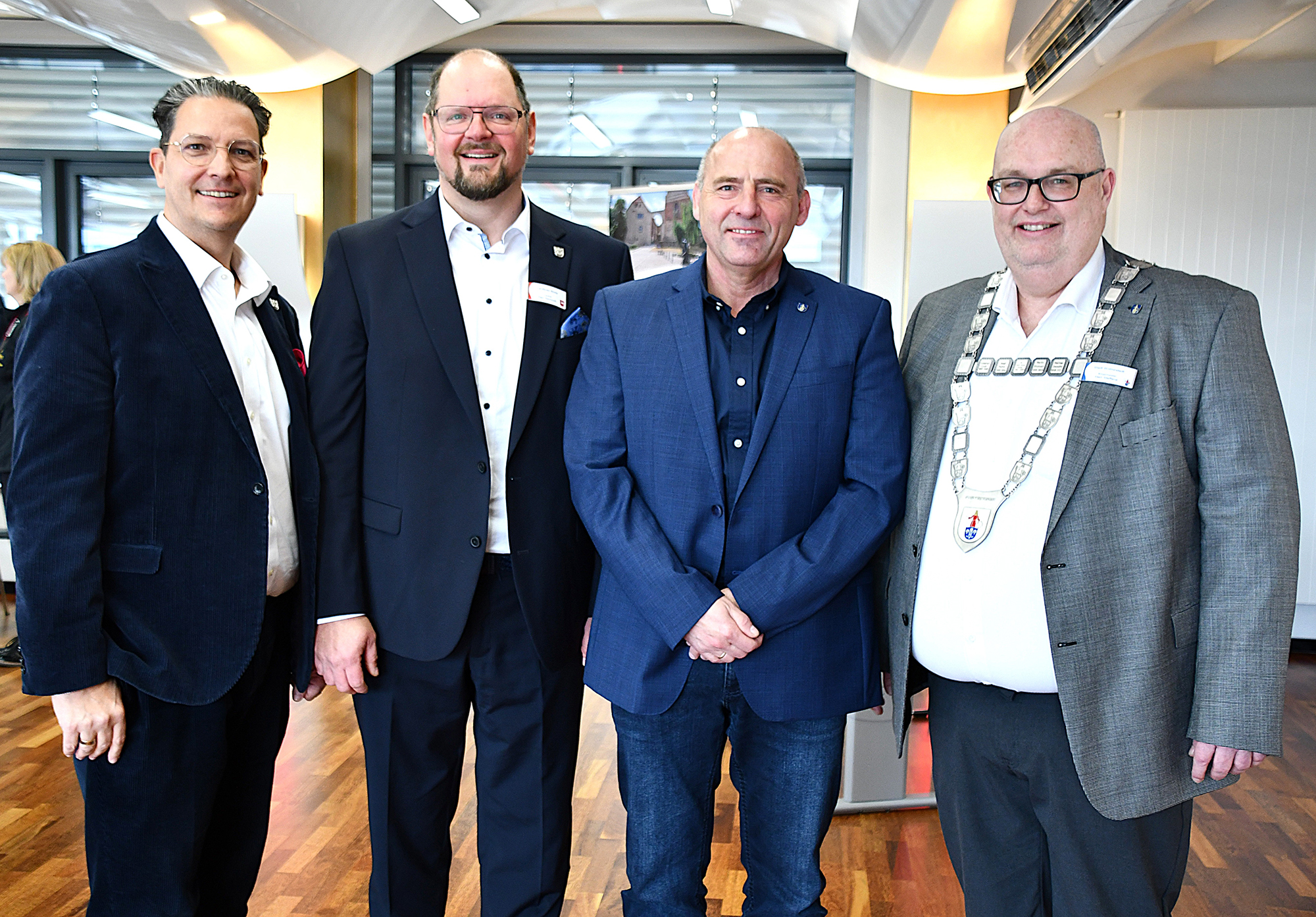
Wolmirstedt’s mayor Mike Steffens, the town treasurer Marko Kohlrausch, Börde district councillor Martin Stichnoth and district head of department Marcus Waselewski took part in the state government’s cabinet meeting abroad.
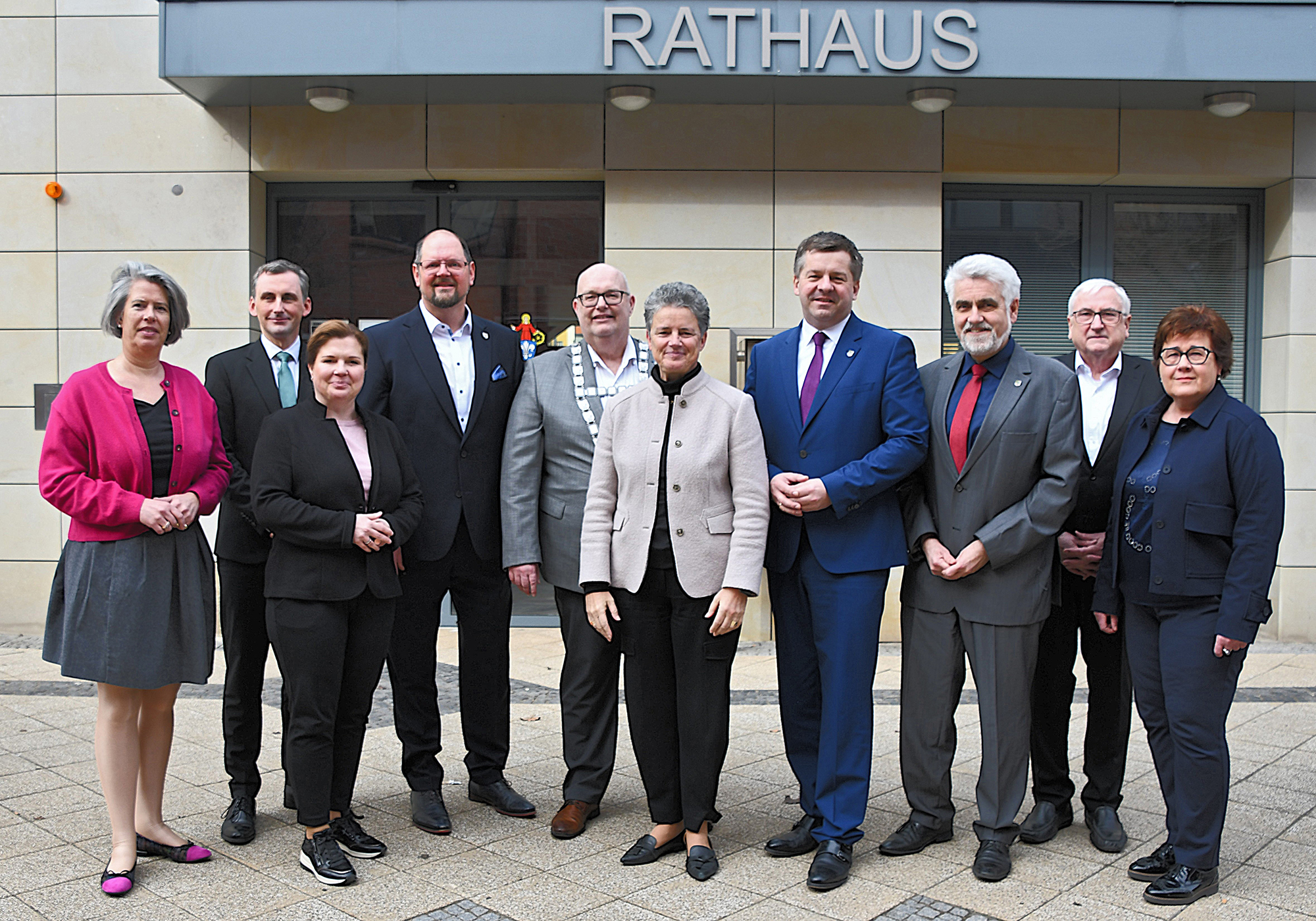
The cabinet of the state of Saxony-Anhalt posed for a commemorative photo in front of Wolmirstedt town hall.
To provide you with an optimal experience, we use technologies such as cookies to store and/or access device information. If you consent to these technologies, we may process data such as browsing behavior or unique IDs on this website. If you do not give or withdraw your consent, certain features and functions may be impaired.
Functional
Always active
The technical storage or access is strictly necessary for the legitimate purpose of enabling the use of a specific service expressly requested by the subscriber or user, or for the sole purpose of carrying out the transmission of a communication over an electronic communications network.
Preferences
The technical storage or access is necessary for the legitimate purpose of storing preferences that have not been requested by the subscriber or user.
Statistics
Technical storage or access for statistical purposes only.Technical storage or access used solely for anonymous statistical purposes. Without a subpoena, the voluntary consent of your Internet service provider or additional records from third parties, the information stored or accessed for this purpose alone cannot generally be used to identify you.
Marketing
The technical storage or access is necessary to create user profiles, to send advertising or to track the user on a website or across several websites for similar marketing purposes.



 Wolmirstedt


